Product Redesign · 2026 · Case StudyProduct Unification and Modernization
How Lean UX and design system strategy delivered a new product in 9 months.
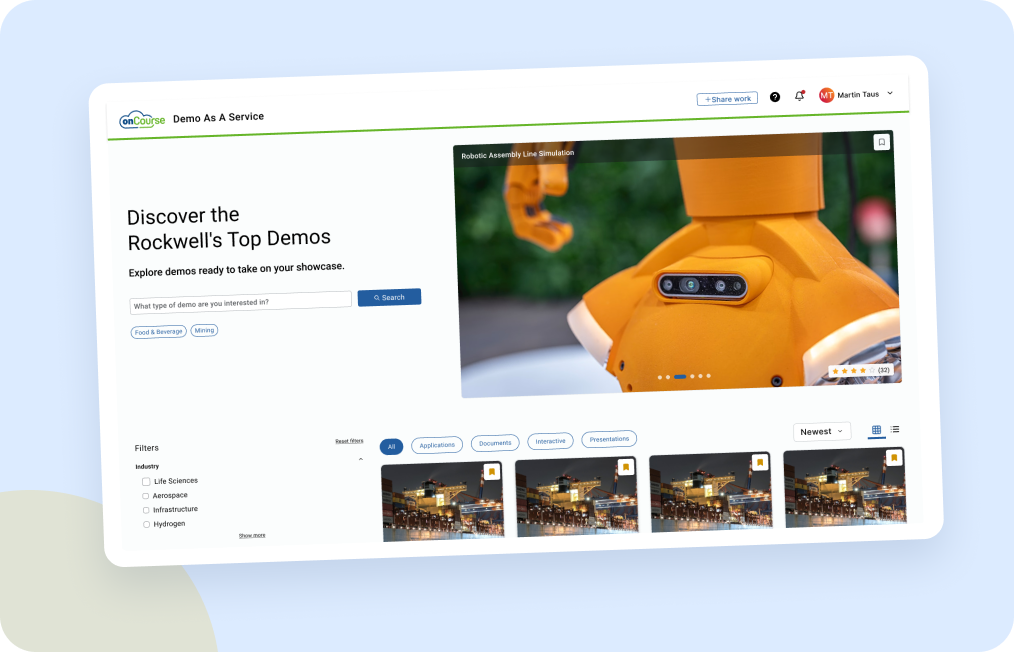
Unifying redundant platforms does not require endless design cycles, it requires systemic thinking.
Martin Tauš
UX Designer a Design System Specialista
9 months · production release
01 · Context
Two products — one idea
Two separate teams independently developed catalogs with presentations and demo apps for sales teams — one for the US and Europe, the other for China. I joined the project as a UX Designer to help modernize the application and identify user needs. The project secured funding and limited resources through the end of the fiscal year in late September.
2 → 1
two product branches unified into one platform
9 months
from collaboration start to production release
Lead Designer
full ownership of the design role
Overview & Key Parameters
Primary goal
Consolidate two separate applications used by different internal teams into one cohesive platform by adjusting the existing codebase so it covers the needs of multiple user groups.
Working model & Timeline
I served as a UX Designer and design systems specialist. The project lasted 9 months from the start of collaboration to production release, and I provided support in parallel with my main role as Design System Designer.
Challenges
For me, the key was understanding the business needs of different business units, considering market differences, and supporting the unification of two solutions into one platform. At the same time, I placed strong emphasis on involving current and potential users in understanding the problem and the design as early as possible.
02 · Discovery & Research
From shared goals to shared understanding
The goal was not to create more artefacts, but to understand the shared problem faster, protect key functions, and uncover adoption barriers.
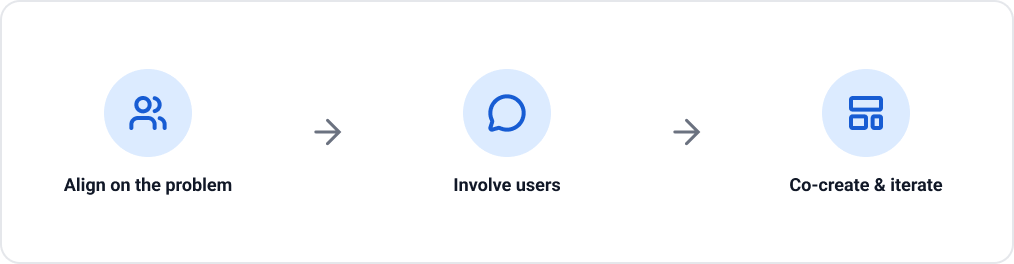
Align on the problem
Facilitating workshops to understand business and operational requirements across teams.
Involve users
Conducting targeted in-depth interviews with active users (to protect key functions) and potential new users (to map friction points and adoption barriers).
Co-create & iterate
Using low-fidelity wireframes during interviews to test conceptual models, gather real-time feedback, and iterate quickly without wasting design capacity.
Low-fidelity designs became a shared language between users, stakeholders, and the design team.
03 · Wireframes
From interviews to a validated flow
I translated interview findings into low-fidelity wireframes. Each iteration validated a different part of the mental model—from orientation through the catalog to content detail.
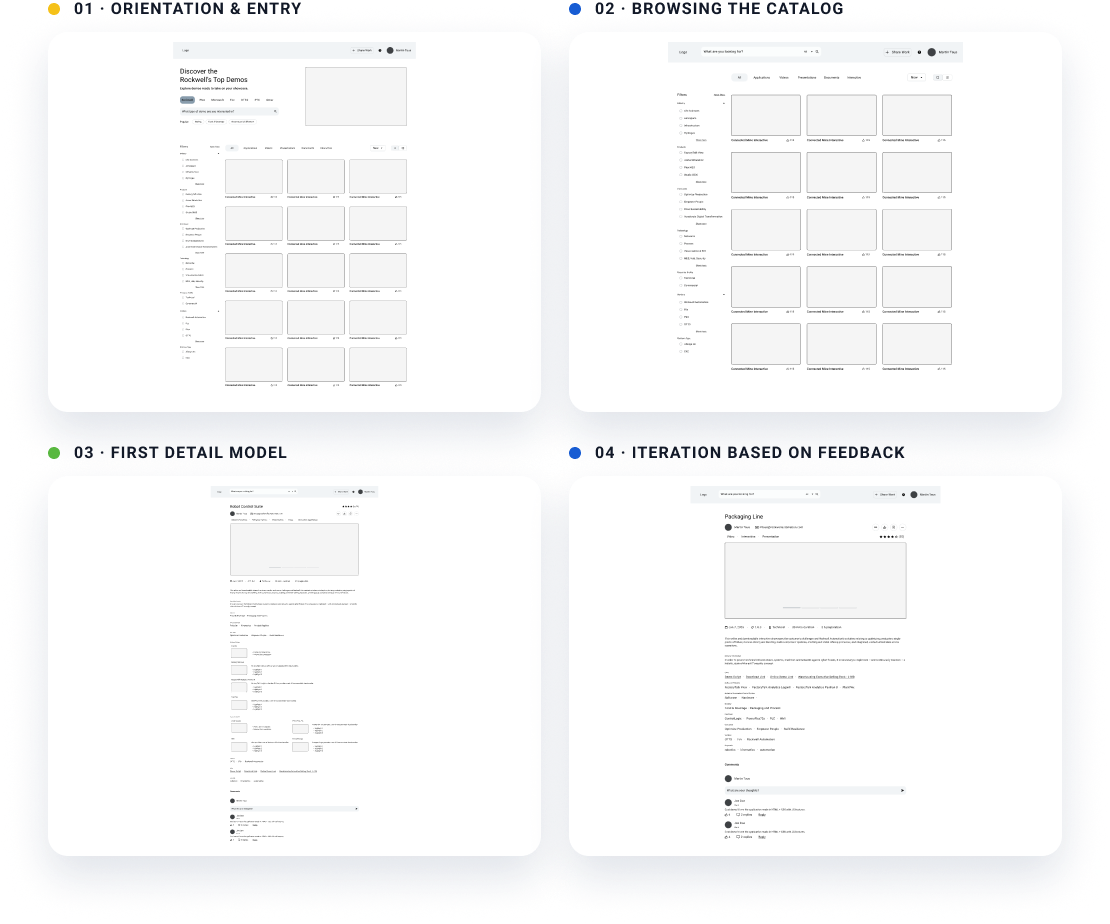
Validate the mental model first. Only then invest in visual quality.
04 · High-fidelity UI
From validated flow to a testable prototype
I translated the validated mental model into accessible UI, an interactive prototype, and concrete decisions ready for validation before development.
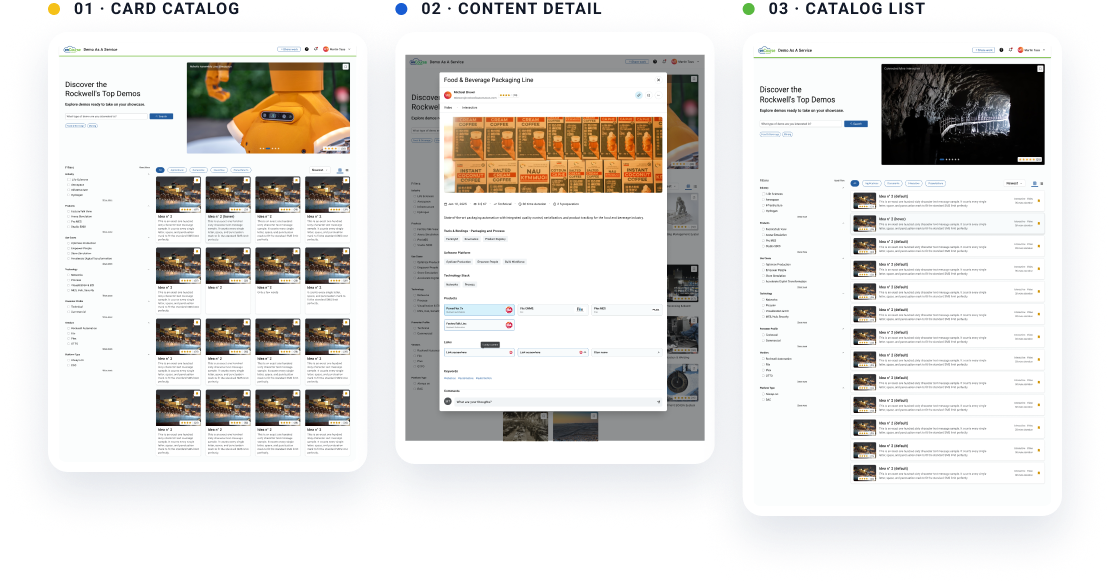
System-based UI design
Translating validated wireframes into refined, accessible UI proposals aligned with modern design standards.
AI-supported prototyping
Using AI tools and workflows in Figma to quickly generate an interactive prototype, significantly shortening the time from wireframe validation to functional prototype testing.
Validation before development
Conducting validation tests with key stakeholders and end users on the interactive prototype to secure approval before handing off to development.
High-fidelity design was not the goal. It was a tool for decision-making before development.
05 · Design evolution
Preserve - Simplify - Unify
The design evolution was more than a visual redesign. In each phase, I protected key functions, simplified the structure, and translated the validated solution into a shared design system.
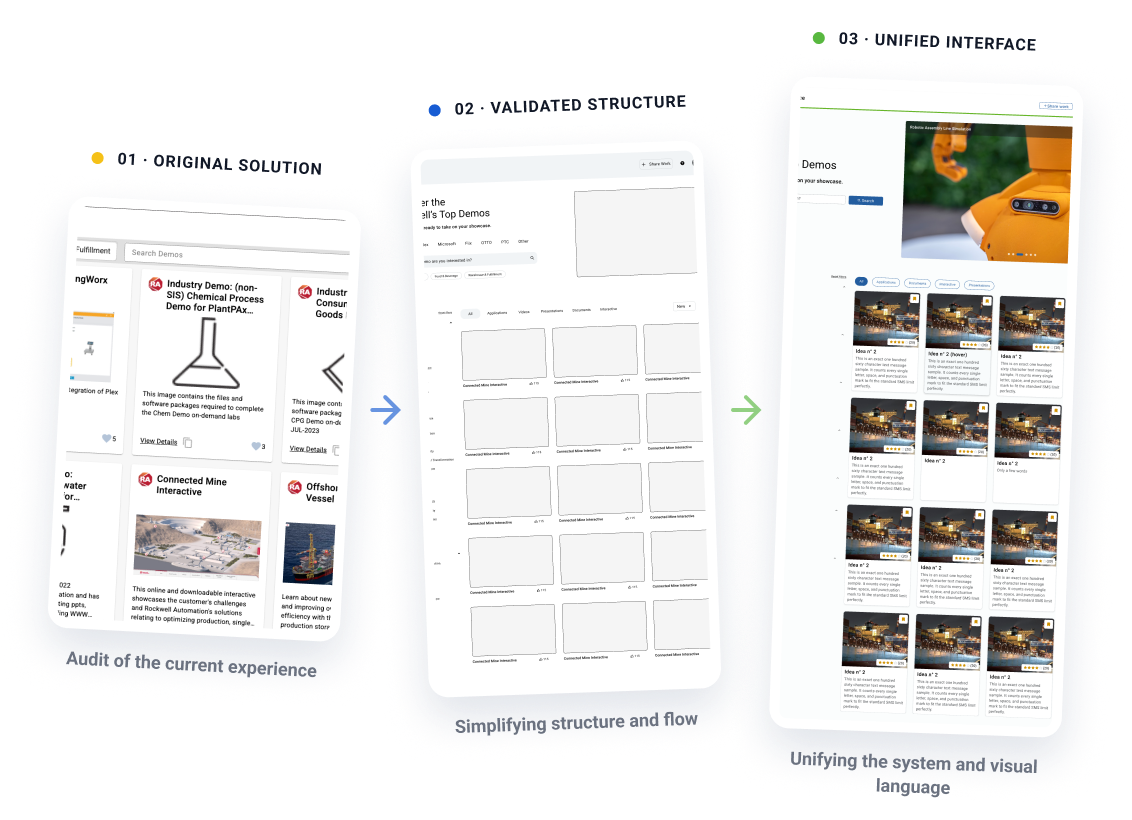
Three decisions that drove the redesign
The comparison keeps the focus on structural and system changes - not cosmetic redesign.
01 / Preserve
Core functions for active users.
02 / Simplify
Structure, flow, and adoption barriers.
03 / Scale
A language of shared components and tokens.
06 · Handoff & Implementation
Handing off the design was just the beginning
I used the design system as a shared language between design and development. During sprints, I refined specifications, addressed edge cases, and monitored implementation to keep the team moving at pace.

Design system integration
Rolling out the design system
Leading the integration of the shared design system into the unified application and demonstrating to stakeholders how tokenized components reduce development effort and maintain consistency.
Specifications & edge cases
Developer specifications
Delivering complete UI specifications ready for developers, including interaction states, edge-case documentation, and links to reusable components.
Ongoing design QA
Support during sprints
Maintaining active contact with the development team throughout the development phase.
Real-time QA & Refining
Resolving implementation blockers, clarifying boundary behaviors, and updating specifications to maintain high development velocity.
Implementation quality is not created at handoff. It is created through ongoing collaboration.
07 · Results & Lessons
The outcome went beyond a production release. The project proved that systems thinking, rapid prototyping, and close collaboration with development can accelerate the path from problem to production-ready solution even with limited time allocation.
Impact that goes beyond launch
9 months
Timely delivery
Successful consolidation of two product branches into one unified platform, launched into production in 9 months.
Higher adoption
Increased design system adoption
Higher adoption of the design system across teams and a clear framework established for future product scaling.
From research to release
Efficient impact (Lean Impact)
A proven model for how a design systems specialist can lead product impact from research to release, even on a part-time schedule, through rapid prototyping and close collaboration with developers.
The design system was not the final layer. It became the infrastructure for faster decision-making, prototyping, and implementation.